Weather Impact on Pest Infestations Causes & Seasonal Risks
Have you ever wondered why ants just come and invade your kitchen just after it has rained heavily, or why rodents just come to the picture just because the temperatures are about to go down? The infestations of pests are hardly unmotivated. The weather conditions in most cases are significant determinants of when, where and how the pests gain entry into homes and business properties.
Knowledge of the relationship between changes in weather and pest activity enables property owners to be a step ahead. Once you are aware of the causes of infestations, it is a lot easier to prevent them in a smarter and much more efficient way. You can take the initiative and mitigate risks ahead of the pests gaining ground instead of responding to a pest problem.
1. Hot Weather and More Pests
With the increase in temperature, there is a high pest activity, as per the professional teams. The hot conditions make the insects faster in their metabolism and reproduction and their life span shorter. This is why spring and summer seasons are the best seasons to be infested with pests such as ants, cockroaches, flies, mosquitoes, wasps and termites.
When the weather is warm, the pests also make it active since they require food, water and shelter. Houses and workplaces create a perfect habitat, such as constant room temperature, water sources, and convenient food sources. One of the entry points can be even a small crack in the wall, a gap between the doors, or a poorly closed window. A small problem may easily grow into a huge problem without pesticide control interventions in time.
2. Rain: A Silent Activation
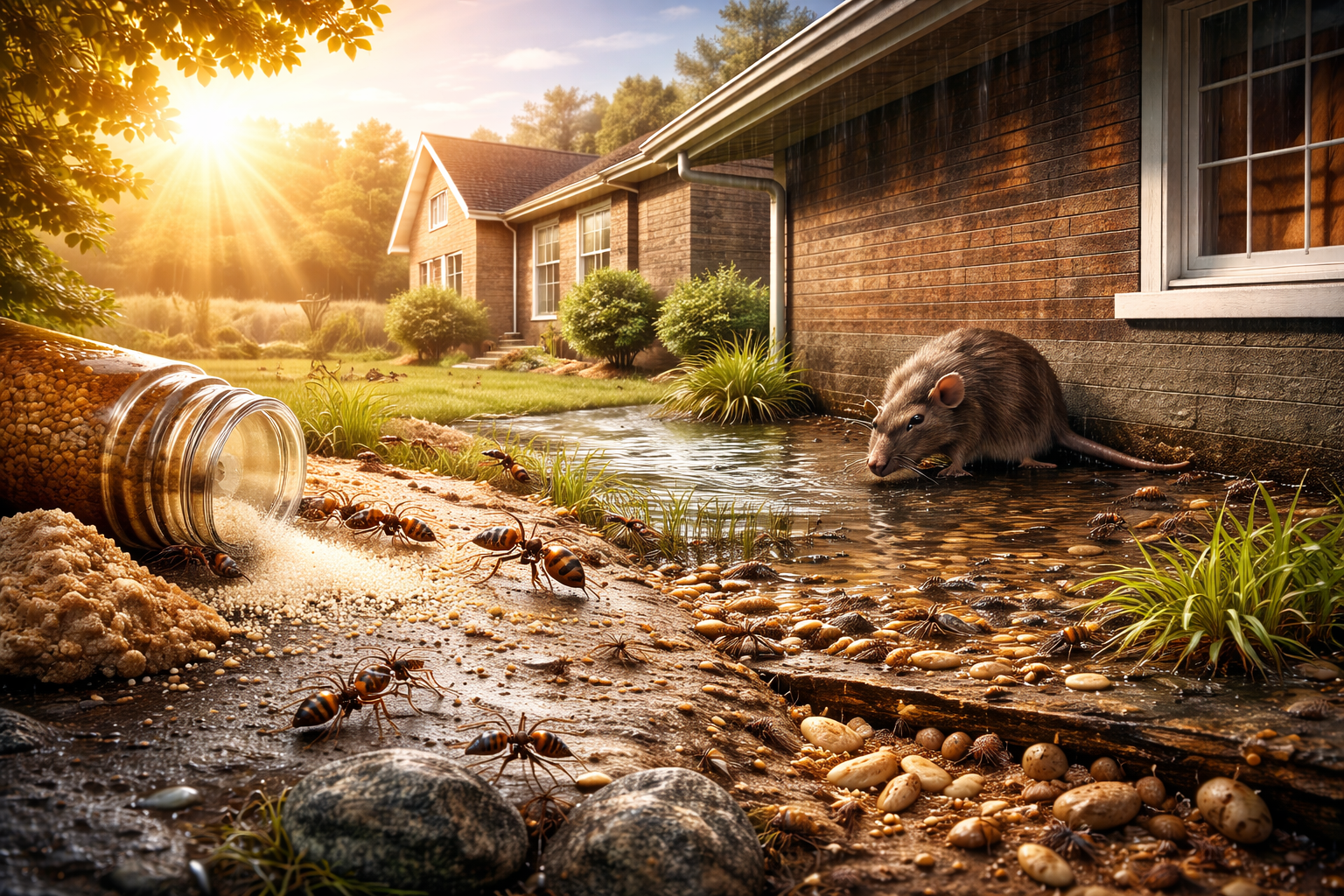
Humidity and excessive rainfall are also considered to be one of the significant causes of the pest infestation. Another good breeding ground of pests like mosquitoes, cockroaches, silverfish and centipedes is the result of unnecessary moisture. This is an ideal habitat, and wet cellars, crawl spaces, broken pipes, and clogged sewers provide insects living in moist habitats.
Pests may also be driven into the house by rain. The flooding of outdoor nests, soil and burrows also forces the pests to find safe and dry places, which frequently turn out to be indoors in homes and buildings. That is why the infestations are usually unexpected and come out of the blue following storms or extended rainy seasons, and leave property owners unprepared.
3. Outdoor and Indoor Infestations
However, contrary to what many people believe, the pests do not die during winter; they just enter the house. When the weather becomes colder, rodents like rats and mice are on the hunt to find warmth, food and some shelter in the adverse outdoor conditions. The wall cavities, attics, basements, garages and storage areas are the perfect concealment locations.
A number of insects are also able to survive low temperatures by nesting, as well as going into hibernation. It still appears that even the heated building is still alive with cockroaches, spiders, bed bugs, and even ants. Winter is a critical season for pest control because of the house area and its constant warm temperatures, due to the presence of food and the necessity to close the entry points and reduce clutter.
4. Change of Season and Pest Movement
The change of seasons, in particular, the summer to autumn and winter to spring, is the most dangerous period of pest infestation. In such periods, the pests have to evolve very fast with the temperatures, moisture content, and food supply. This usually causes a change of location and the spread of the pests.
An example is that ants can migrate colonies as a result of a shift in the temperature of the soil, whereas termites are more active when the weather is hot and wet. These changes in seasons may lead to an abrupt infestation, even in houses that were initially free of any pest issue. These periods should be checked on a regular basis to detect early.
5. Long-term Pest Problems and Climate Change
The behaviour of pests is also undergoing a significant change due to climate change over a long period. Winters are warmer, and summers are getting longer; it means that the pests have a longer time to live and infect new territories. This results in increased breeding seasons, survival rates and an increase in the levels of pests.
Consequently, pests that were previously regarded as a nuisance during the season can now become a year-round menace. Certain species are also becoming stronger and more difficult to manage, thus professional pest management is becoming a significant concern for residential and commercial premises.
6. Protecting your Property All Year Round
Although it is inevitable that the weather may change, pest infestations need not. There are easy prevention measures that take a lot to eliminate the risk of pest problems. Plugging holes and fissures, repairing holes, enhancing drainage and keeping the facility clean assist in eliminating environments that attract pests.
Expert crews of pest control services are particularly desirable with infestations which pertain to the weather. The trained specialists are aware of the reactions of various pests to various changes in the environment and can use this knowledge to offer specific treatment to prevent the aggravation of problems.
Conclusion
Weather has a significant influence on the behaviour of pests, and in most instances, the area and purpose of infestations depend on the weather. As long as you know how to prevent pests in your home or business in time, and get expert help, you will be able to keep your place pest-free because of the weather conditions.